

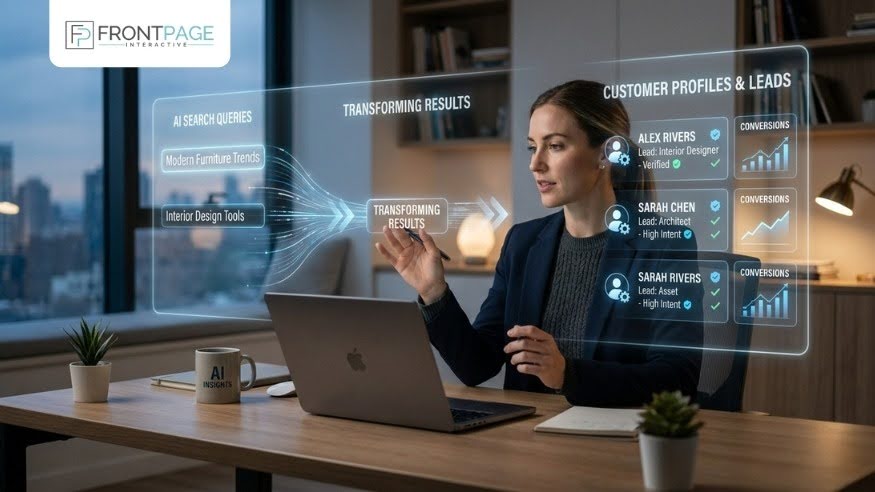

AI search traffic is no longer a future trend; it’s already reshaping how people discover businesses online. From Google AI Overviews to Bing AI results and ChatGPT-powered search experiences, users are getting faster, more direct answers than ever before.
On paper, this sounds like a dream for businesses investing in SEO, web design, and local search. And yet, when clients come to us, the story is almost always the same. Traffic is rising. Visibility is improving. But conversions? Still disappointing. We’ve worked with businesses that rank prominently in AI-driven results but struggle to generate consistent leads, appointments, and customers. The disconnect isn’t about getting found; it’s about what happens after someone clicks.
This is where most traditional digital marketing strategies fall apart. They were built for a different era of search behavior. Today, businesses need a conversion-focused system that aligns with AI-driven intent and guides users through a structured journey.
II. Understanding AI Search Traffic
AI search traffic is fundamentally different from traditional organic traffic. Users arriving from AI-generated summaries or conversational search tools are not casually browsing. They’ve already consumed a synthesized answer before clicking through. That means they arrive with:
- Higher expectations
- Clearer intent
- Less patience for irrelevant content
Traditional SEO strategies focused heavily on rankings and keywords. But AI search changes the game. Your content must now fulfill the promise made by the AI result. For example, if an AI tool summarizes your page as a “step-by-step guide,” the user expects depth and clarity immediately upon arrival. If they land on a vague or generic page, they leave instantly.
This is why aligning your SEO, web design, and local search strategies with user expectations is critical. AI visibility gets the click, but relevance and experience drive the conversion.
III. The Biggest Conversion Gap (And Why It Happens)
The biggest issue we see with clients isn’t traffic; it’s the lack of a conversion system. Before working with us, many businesses had already tried multiple lead generation tactics. Unfortunately, most of them failed for the same reasons.
What clients tried and why it didn’t work:
- Generic website design that didn’t match user intent
- Over-reliance on SEO rankings without considering post-click experience
- Single-path funnels that treated all visitors the same
- Minimal local search optimization beyond basic listings
- Weak calls-to-action that didn’t motivate action
The result?
Users would land on the site, skim briefly, and leave without converting into leads or customers. The core issue is simple: AI search brings in qualified users, but without a tailored journey, those users don’t know what to do next.
IV. Optimize for Intent, Not Just Keywords
If there’s one shift businesses must make, it’s this: stop optimizing only for keywords and start optimizing for intent. Every visitor falls into one of three primary intent categories, and your digital marketing strategy must address each one separately.
Informational Intent
These users are in learning mode. They’re asking questions, exploring options, and building understanding.
What works best:
- In-depth blog posts
- Educational guides
- Downloadable resources like checklists or templates
Trying to sell too early here often pushes users away. Instead, focus on building trust and authority.
Commercial Intent
These users are evaluating solutions. They’re comparing services, reading reviews, and narrowing down options.
What works best:
- Service-specific landing pages
- Case studies and testimonials
- Clear explanations of your process
This is where strong SEO and web design combine to build credibility and reduce friction.
High-Intent / Urgent
These users are ready to take action. They want quick answers and immediate solutions.
What works best:
- Simple booking pages
- Prominent contact options
- Fast-loading, mobile-optimized design
A well-optimized local search presence is especially important here, as many high-intent users are looking for nearby solutions.
V. Design Landing Pages That Convert AI Visitors
One of the biggest mistakes businesses make is sending all traffic to the homepage. AI-driven users expect precision. If they click on a result about a specific service, they should land on a page dedicated to that service, not a general overview.
High-converting landing pages share a few key characteristics:
- A headline that directly matches the user’s query
- Clear, concise messaging
- Strong social proof (reviews, testimonials, results)
- Minimal distractions
- A single, focused call-to-action
Effective web design isn’t about looking impressive it’s about guiding users toward a decision. When we redesign client pages with this approach, the difference is immediate: lower bounce rates, longer engagement, and significantly higher conversion rates.
VI. Turn Traffic into Leads
Traffic alone has no value unless it’s captured. This is where many businesses struggle. They rely on passive methods like a “Contact Us” page and hope users take action. Most don’t.
A strong lead generation system includes multiple entry points:
- Lead magnets tailored to intent (guides, audits, tools)
- Short, optimized forms
- Pop-ups or exit-intent offers
- Clear value propositions
For example, an informational visitor might download a guide, while a commercial visitor might request a consultation. By offering the right option at the right time, you significantly increase the chances of capturing leads.
VII. Turn Leads into Appointments
Capturing a lead is just the beginning. The next challenge is converting that lead into a scheduled appointment. This is where many businesses lose momentum.
Common failures we see:
- Delayed responses to inquiries
- No automated follow-up system
- Generic, impersonal communication
What actually works:
- Instant email and SMS follow-ups
- Integrated scheduling tools
- Personalized messaging based on user behavior
Speed is critical. Studies consistently show that responding within minutes dramatically increases the likelihood of conversion. A well-structured digital marketing system ensures no lead goes cold.
VIII. Convert Appointments into Customers
Even with booked appointments, conversion isn’t guaranteed. To turn prospects into paying customers, businesses must focus on:
- Pre-appointment communication
- Clear value positioning
- Consistent messaging
We often find that clients lose deals not because of pricing but because expectations weren’t set properly. By refining messaging and aligning it with user intent, businesses can significantly improve their close rates.
IX. Leverage AI to Improve Conversion Rates
AI isn’t just driving traffic; it can also optimize your entire funnel.
Businesses can use AI tools to:
- Personalize website content
- Optimize email campaigns
- Analyze user behavior patterns
- Predict conversion opportunities
When combined with strong SEO, web design, and local search strategies, AI becomes a powerful tool for continuous improvement.
X. Track What Actually Matters
One of the biggest mindset shifts businesses need to make is moving away from vanity metrics. Metrics like traffic and rankings are useful, but they don’t directly impact revenue.
What truly matters:
- Number of leads generated
- Appointment conversion rate
- Customer acquisition cost
- Revenue per channel
A successful digital marketing strategy connects every stage of the funnel, ensuring that AI search traffic leads to measurable business outcomes.
XI. Real-World Examples / Case Studies
Case Study 1: Service-Based Business
A company invested heavily in SEO and saw strong AI search visibility but very few leads.
Solution: Intent-based landing pages and lead magnets Result: Tripled lead generation within months
Case Study 2: Local Business
Strong local search rankings brought consistent traffic, but bookings remained low.
Solution: Streamlined web design and improved booking flow Result: Doubled appointment rates
Case Study 3: B2B Organization
High traffic from content marketing but minimal conversions.
Solution: Structured funnel and automated follow-ups Result: Predictable customer acquisition
XII. Common Mistakes to Avoid
- Treating all visitors the same
- Ignoring user intent
- Sending traffic to generic pages
- Weak or unclear CTAs
- Lack of follow-up systems
These issues are extremely common but also highly fixable with the right strategy.
XIII. Action Plan (Step-by-Step)
To turn AI search traffic into real results, follow this framework:
- Analyze your traffic sources
- Segment users by intent
- Create dedicated landing pages
- Implement lead capture strategies
- Automate follow-ups
- Optimize appointment scheduling
- Track performance metrics
- Continuously refine your funnel
This step-by-step approach transforms scattered efforts into a cohesive, high-performing system.
XIV. Final Thought
AI search is changing how users find businesses, but it’s also exposing weaknesses in traditional digital marketing strategies. Getting traffic is no longer the challenge. Converting it is. Businesses that succeed will be those that align SEO with user intent and invest in conversion-focused web design. Build structured lead generation systems. Optimize every stage of the customer journey
Those that don’t will continue to see traffic without results. The opportunity is massive but only for those who adapt. If your SEO and web design are bringing in traffic but not converting into leads, appointments, or customers, it’s time for a smarter approach.
At Frontpage Interactive, we specialize in turning missed opportunities into measurable growth through intent-driven digital marketing and high-converting local search strategies.
Don’t let valuable AI search traffic slip away build a system that converts every click into real business results. Get in touch with Frontpage Interactive today and start turning your traffic into customers.
FAQs
1. What is AI search traffic and how is it different from traditional SEO traffic?
AI search traffic comes from tools like Google AI Overviews and ChatGPT, where users receive summarized answers before clicking. These visitors arrive with clearer intent and higher expectations than traditional search users.
2. Why am I getting traffic but no leads or customers?
This usually happens when your website design and content don’t match user intent after the click. Without a clear conversion path, even high-quality SEO traffic won’t turn into leads.
3. How can I optimize my site for better lead generation from AI traffic?
Focus on intent-based landing pages, strong CTAs, and lead capture tools like forms and guides. Align your digital marketing strategy with what users actually need at each stage.
4. What role does local search play in AI-driven conversions?
Local search helps capture high-intent users who are ready to act quickly. Optimizing for local visibility ensures you appear when nearby customers are looking for immediate solutions.
5. How do I turn leads into actual appointments and customers?
Use fast follow-ups, automated responses, and easy booking systems to reduce friction. A structured sales process ensures your leads don’t go cold and convert into paying customers.